
October 13, 2026 · 8 min read
The Extrusiones Metálicas RPT series: 2400, 2500, 4600 and 6500
The four thermal-break series in the Línea Española range: what each one is for, their Uf values, and how the whole window changes with the glazing.
Extrusiones Metálicas is our main aluminium profile supplier, and its Línea Española range has four thermal-break series: two sliding and two casement. We fabricate and install all of them, so it is worth explaining how they differ and when each one fits.
If thermal breaks are new to you, start with what a thermal break is.
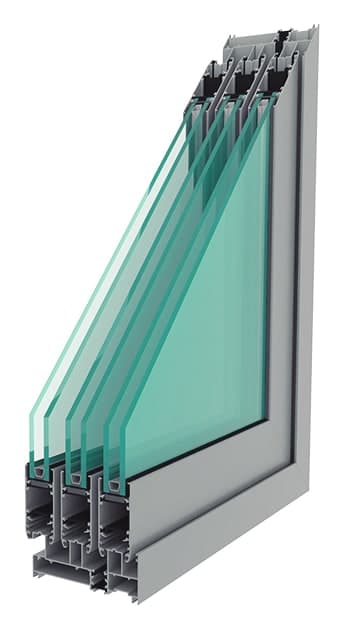
Perimeter sliding
2400 RPT
- Frame 80 mm (2 tracks) · 124 mm (3 tracks)
- Polyamide 18 – 32 mm
- Glazing up to 24 mm
- Uf 3.82 W/m²K
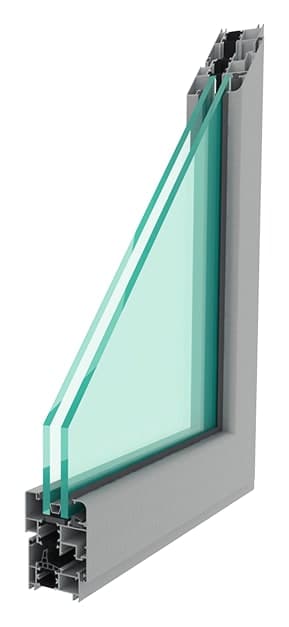
Casement, 16 mm channel
2500 RPT
- Frame 62 mm window · 58 mm door
- Polyamide 24 mm
- Glazing up to 30 mm
- Uf 3.00 W/m²K
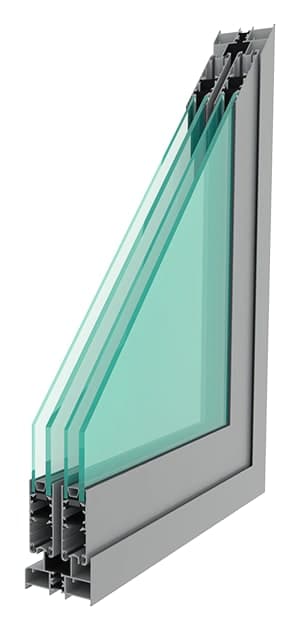
Perimeter sliding
4600 RPT
- Frame 75 mm (2 tracks) · 112 mm (3 tracks)
- Polyamide 14.8 – 24 mm
- Glazing up to 18 mm
- Uf 4.30 – 4.66 W/m²K
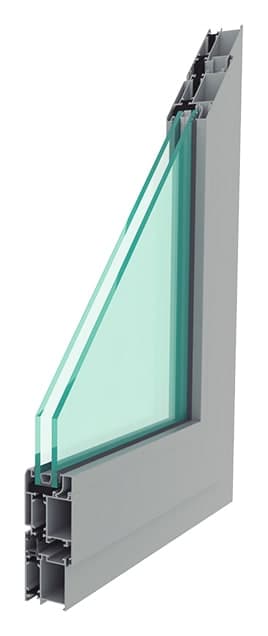
Casement, Euro channel
6500 RPT
- Frame 52 mm window · 45 mm door
- Polyamide 14.8 mm
- Glazing up to 32 mm
- Uf 3.68 W/m²K
2400 RPT: the slider for balcony doors
A perimeter sliding system designed for balcony doors and large openings. The frame comes in two tracks, at 80 mm, or three, at 124 mm, and the sash is 76 mm. It takes two-, three-, four- and six-leaf layouts, glazing up to 24 mm and multipoint locking. Frames and sashes are mitred at 45°.
The thermal break combines 18, 28 and 32 mm polyamide bars depending on the section. With that, the manufacturer calculates a Uf of 3.82 W/m²K at the side and head frame, and 3.65 at the central meeting stile.
Tested on a two-leaf 1200 × 1200 mm window, it achieved:
| Test | Standard | Result |
|---|---|---|
| Air permeability | UNE-EN 12207 | Class 3 |
| Watertightness | UNE-EN 12208 | 7A |
| Wind resistance | UNE-EN 12210 | C5 |
| Acoustic insulation | with 4/16/4 glazing | 30 dB · 32 dB airborne |
2500 RPT: the casement that competes with uPVC
That line is the catalogue's own, and the numbers back it up. It is a casement system with a 16 mm hardware channel, a 62 mm frame for windows and 58 mm for doors, and a sash of 76 mm for windows and 102 mm for doors. It uses 24 mm polyamide in every section and takes glazing from 24 to 30 mm. It can be built as tilt-and-turn, with concealed or visible hinges, and with multipoint locking.
Its Uf is 3.00 W/m²K at frame and sash, and 2.95 at the central mullion: about 21 % lower than the 2400.
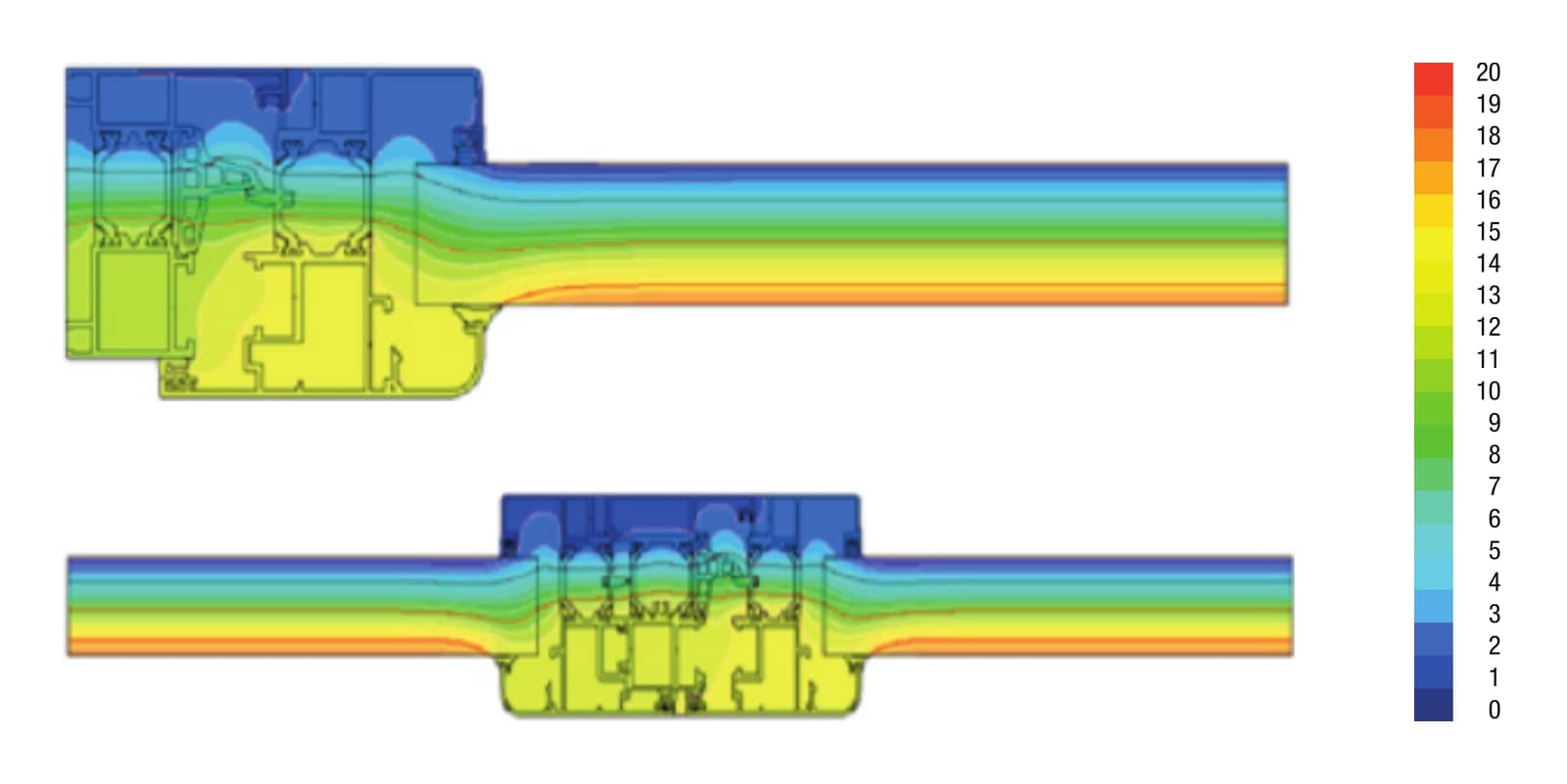
Tested on a two-leaf tilt-and-turn window of 1200 × 1200 mm, it moved up one class for air and two for water compared with the slider:
| Test | Standard | Result |
|---|---|---|
| Air permeability | UNE-EN 12207 | Class 4 |
| Watertightness | UNE-EN 12208 | 9A |
| Wind resistance | UNE-EN 12210 | C5 |
| Acoustic insulation | with 4/16/4 glazing | 30 dB · 32 dB airborne |
Why the casement insulates better
When it closes, a casement sash presses against its gaskets all the way round. A slider needs clearance to move, and air and water get through that clearance. It is the same reason the 2500 does better in the tightness tests. Where the opening allows a casement, the casement will always perform better.
4600 RPT: the mid-size slider
This is the range's other perimeter slider, for balcony doors and mid-size openings. The frame is 75 mm with two tracks and 112 mm with three, and the sash is 71 mm. It takes glazing up to 18 mm, a multipoint or flush lock, an insect screen and fixed lights from the same series, and comes in two, three, four or six leaves.
Here is the figure that surprises most: its polyamide is shorter than the 2400's, 14.8 mm in the frame and 24 mm in the sash, and it shows. The manufacturer calculates a Uf of 4.30 W/m²K for the inner frame and sash, 4.66 for the outer one and 5.07 at the meeting stile, where the two sashes cross. It is the least insulating profile of the four RPT series. It is still far better than a slider with no thermal break, but for a large opening where performance matters, the 2400 does more.
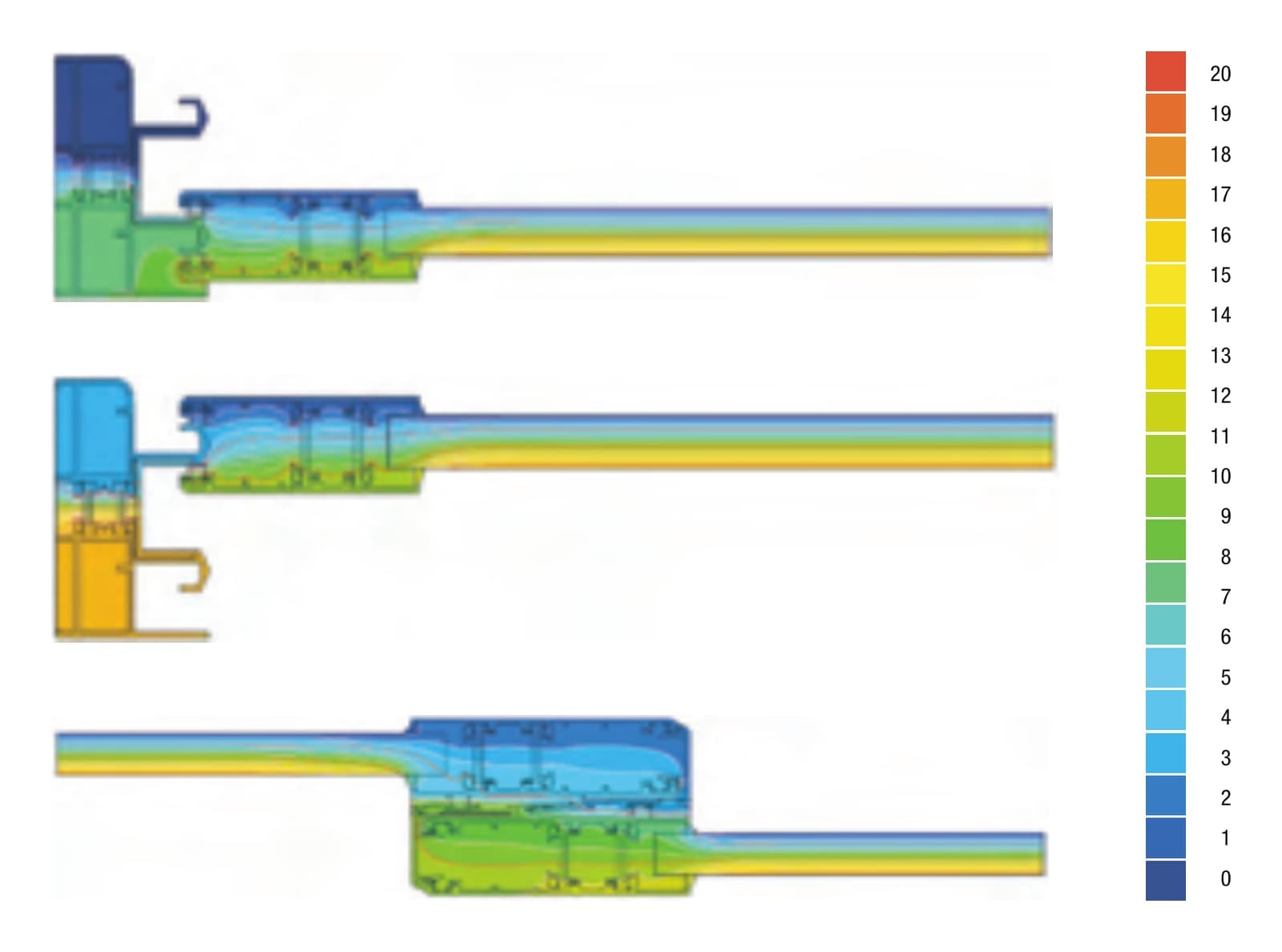
Maximum sizes recommended by the manufacturer:
| Type | Width | Height | Max. weight |
|---|---|---|---|
| 2-leaf window | 2200 mm | 1800 mm | 65 kg |
| 4-leaf window | 4400 mm | 1800 mm | 65 kg |
| 2-leaf door | 2800 mm | 2600 mm | 130 kg |
| 4-leaf door | 5600 mm | 2600 mm | 130 kg |
6500 RPT: the Euro-channel casement
This is the casement with the most design freedom: it takes curved sashes, frames with a decorative overlap and seven opening types, among them side-hung, top-hung, tilt-and-turn and single or double doors. The frame is 52 mm for windows and 45 mm for doors, the sash 63 and 84 mm, and it takes the thickest glazing in the range: up to 32 mm.
It uses 14.8 mm polyamide in every section. Its Uf is 3.68 W/m²K for frame and sash and 3.50 at the meeting stile. That puts it between the 2500 and the 2400; what sets it apart is not the profile but the room for a wide-cavity double glazed unit or an acoustic laminate.
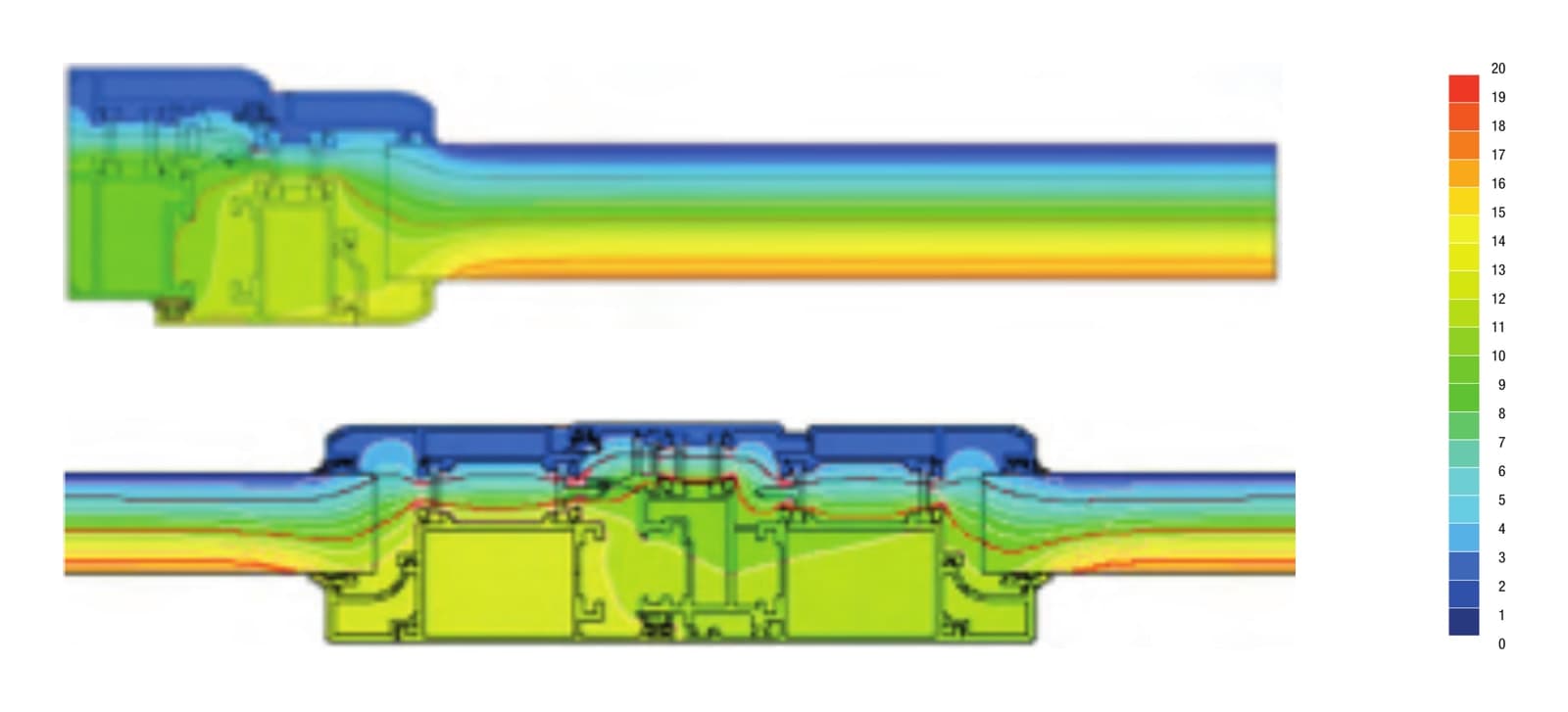
All four side by side
| Series | Type | Polyamide | Max. glazing | Frame Uf | Meeting-stile Uf |
|---|---|---|---|---|---|
| 2400 RPT | Sliding | 18 – 32 mm | 24 mm | 3.82 | 3.65 |
| 2500 RPT | Casement | 24 mm | 30 mm | 3.00 | 2.95 |
| 4600 RPT | Sliding | 14.8 – 24 mm | 18 mm | 4.30 – 4.66 | 5.07 |
| 6500 RPT | Casement | 14.8 mm | 32 mm | 3.68 | 3.50 |
Uf in W/m²K. The polyamide bar explains almost all of the ranking: the wider the polyamide, the less heat crosses the profile.
The whole window: Uw
Uf describes only the profile. What you feel in the room is Uw, the whole-window value, and that depends mostly on the glass. Try combining series and glazing:
Uw estimator · whole window
Estimated Uw
1.64W/m²K
0.70 × Ug 1.06 + 0.30 × Uf 3.00
- From the glass0.74
- From the frame0.90
The exercise makes one thing clear. With the same low-E argon glazing, going from the least insulating series to the most insulating one, the 4600 to the 2500, moves Uw from 2.09 to 1.64. Going from single glazing to that low-E argon unit, in the same series, moves it by more than three points: from 5.12 to 1.89 on the 2400.
Choose the series for the opening and its use; the glass decides the thermal performance. That is why it pays to understand how the U-value changes with each type of double glazing.
Which one to choose
| Opening | Series | Why |
|---|---|---|
| Balcony door or large sliding window | 2400 RPT | Up to six leaves and a three-track frame |
| Mid-size slider with insect screen | 4600 RPT | Screen and fixed lights from the same series; glazing up to 18 mm |
| Bedroom or study where tightness matters | 2500 RPT | Best Uf, class 4 air and 9A water |
| Special design, or thick acoustic glazing | 6500 RPT | Curved sashes, overlap and glazing up to 32 mm |
All four allow two-tone profiles, with one finish outside and another inside.
The manufacturer's Uf values are calculations to EN ISO 10077-2, and the catalogue itself warns they are indicative: a window's real value comes from testing the profile and glass together.
How we work with them
We cut, machine and assemble these series at our plant in Santa Catarina, and temper and insulate the glass under the same roof. Send us your list of openings with their orientation and we will propose a series and glazing for each, with the estimated Uw.
Sources
- Extrusiones Metálicas, 2400 RPT sliding series and 2500 RPT casement series catalogues (2022), 4600 RPT sliding series (February 2024) and 6500 RPT casement series (December 2023): dimensions, polyamide, Uf, simulations, maximum sizes and test results.
- Scottish Government, Tables of U-values and thermal conductivity, note 1 to table 6.A.1: the 30 % frame fraction used in the estimator.